Independent
Measured by someone else
A university laboratory, using a standard method, on a sample we sent them. We report the number they gave us and name the institution.
Limit: these are tests of the fabric. not of a body.
Free UK delivery · Duties paid · 30-day free returns
Evidence
Four measurements sit behind this product. Three were made by independent university laboratories. One is ours. Below is all of it – the methods, the numbers, the published research we lean on, and the things we have not proven.
2 independent lab tests
1 internal wear study
1 clinical study in preparation

University of Ljubljana
Where it was tested
−1.3°C
Max measured vs cotton
99.99%
RF blocked by fabric 2–6 GHz
3.4×
Air permeability vs cotton
How to read this page
It is an unusual thing to do and it makes our own numbers look weaker. We do it anyway, because in a category this full of promises the labelling is the only thing that makes any of the numbers worth reading.
Independent
A university laboratory, using a standard method, on a sample we sent them. We report the number they gave us and name the institution.
Limit: these are tests of the fabric. not of a body.
Our own
Our internal wear testing. Real conditions, small sample, no blinding, no peer review. Useful, and clearly not the same category of evidence.
Limit: not a clinical trial, and we never present it as one.
Published
Peer-reviewed work by other people, on temperature and on radiofrequency exposure generally. It explains why any of this is worth measuring.
Limit: none of it studies this product.
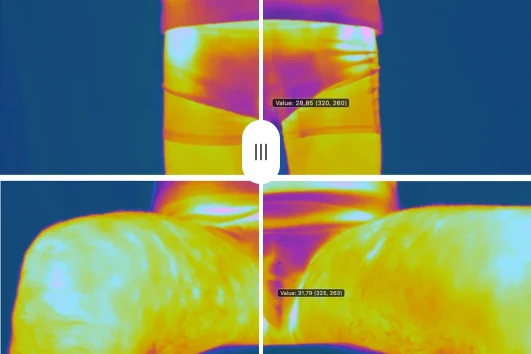
Regular
underwear
Majella
underwear
The premise
Testicles sit outside the body for a simple biological reason: sperm production requires a temperature 2–6 °C below core body temperature.
Modern daily habits — eight hours in an office chair, hot cars, and synthetic underwear — trap heat and narrow this vital gap.
“Scrotal hyperthermia impairs sperm concentration and motility, with prolonged desk sitting increasing temperatures by up to 2.0 °C.”
— Human Reproduction Update & Journal of Andrology
This biological fact isn’t ours, nor is it controversial. What we set out to prove is simple: can redesigned underwear restore that natural temperature gap, and by how much?
The modern environment
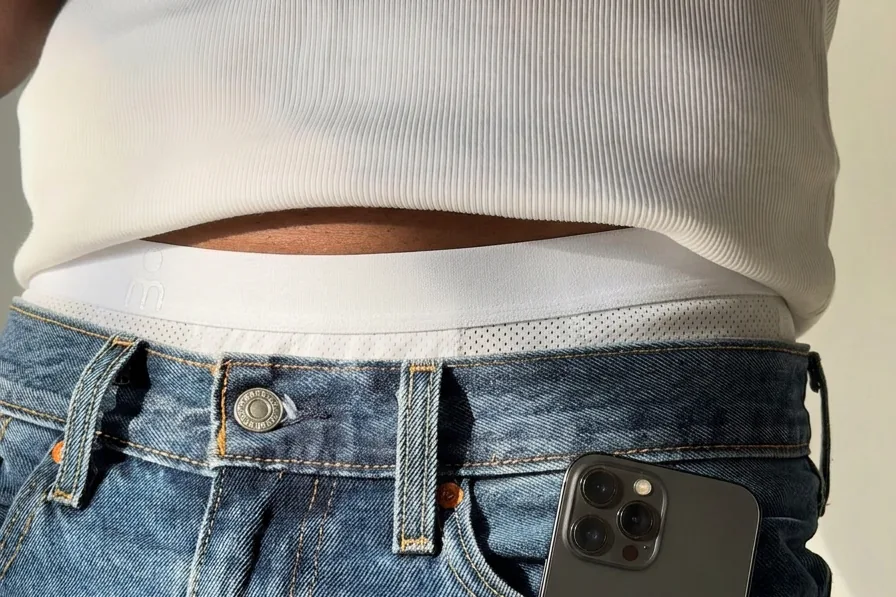
Phones stay in our pockets all day, right next to sensitive tissue. A growing and consistent body of research highlights the link between radiofrequency electromagnetic fields (RF-EMF) and reduced semen quality.
“RF-EMF exposure from mobile phones is consistently associated with decreased sperm viability, motility, and increased oxidative stress.”
— Environmental Research & Central European Journal of Urology
Radiation affects male reproductive tissue in two primary ways: it causes localized micro-thermal heating and triggers cellular stress, both of which impair optimal sperm production.
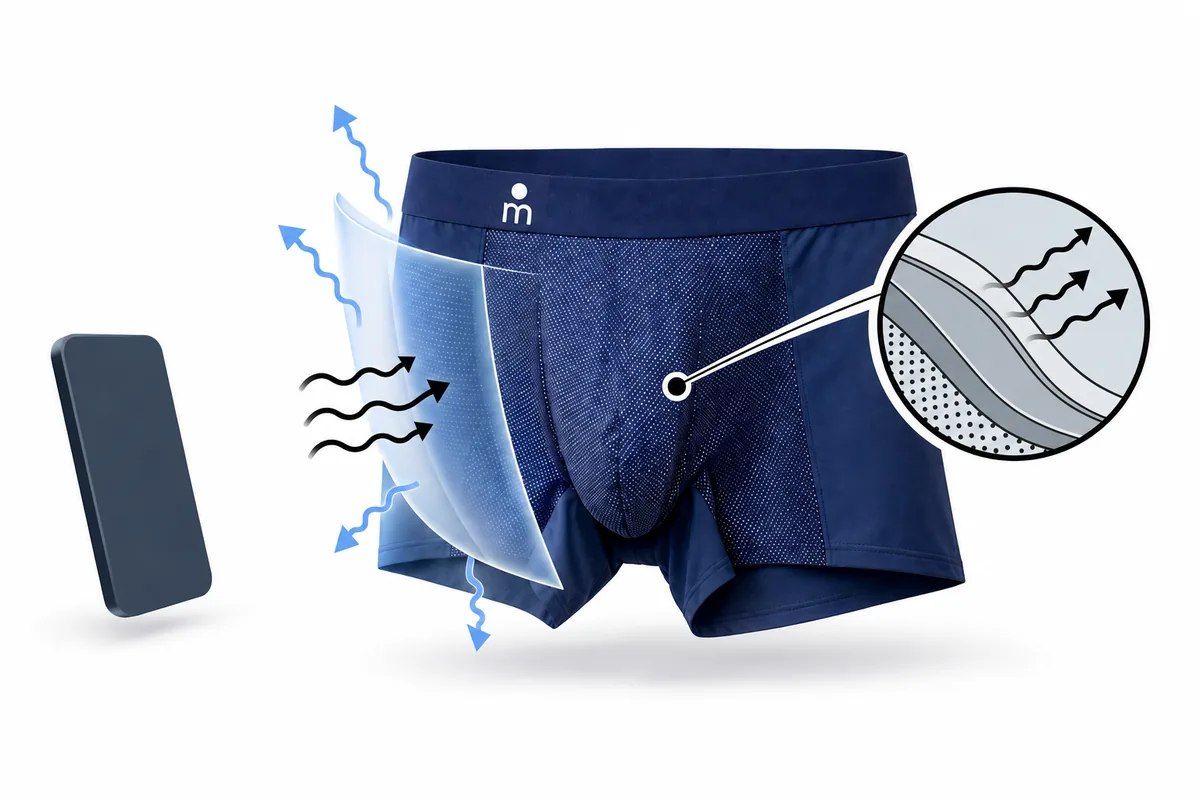
Because phones and Wi-Fi are now an unavoidable part of daily life, we integrated silver-fiber shielding directly into our fabric. Lab-tested to block up to 99.99% of RF radiation, it provides a direct, active barrier where exposure is highest.
The three tests
Test 01 · Independent
Institution
Laboratory for Radiation and Optics, Faculty of Electrical Engineering, University of Ljubljana
Sample
Fabric from the shielding panel
Method
Transmission attenuation measured across the 2–6 GHz range — the bands used by mobile telephony and Wi-Fi
Result
Up to 99.99% of transmitted RF energy blocked
What it shows
The fabric attenuates radiofrequency energy in the tested range
What it does not show
Any health outcome. It is a materials test, on fabric, not on people.
Durability
Designed for long-term wear and repeated washing — silver fibers are structural, not a surface coating that washes out.
Test 02 · Independent
Institution
Institute for Textile Technology, Faculty of Natural Sciences and Engineering, University of Ljubljana
Sample
Majella knit, against a cotton control
Method
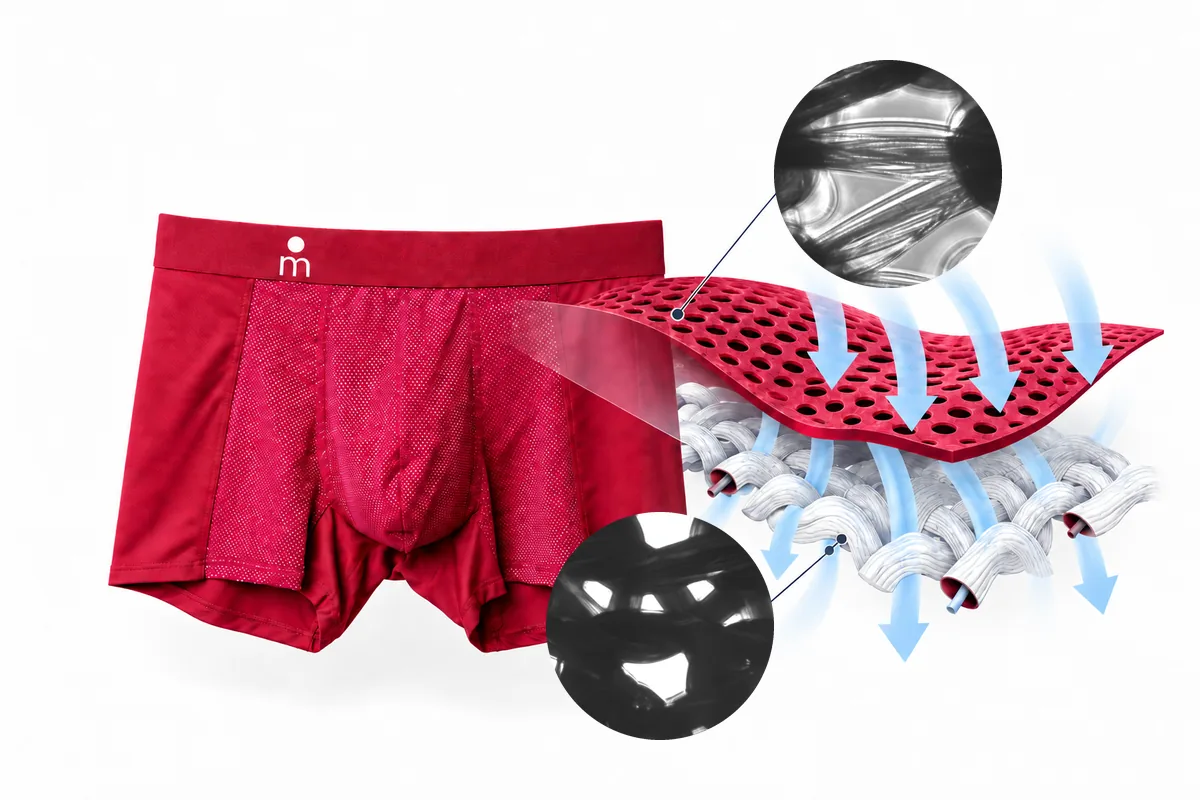
Standardised air permeability testing
Result
Up to 3.4× the air permeability of cotton
Also observed
At 400× magnification the fibres measure roughly five times thinner than a human hair
What it shows
Substantially more air moves through this fabric than through cotton
What it does not show
A specific temperature outcome on a body. Permeability is not the same measurement as cooling.
Test 03 · Our own
Who ran it
Us. Not a laboratory, not independent.
Duration
One month
Method
Paired wear testing with temperature probes during sedentary office work. Majella one day, cotton the next — same person, consecutive days, comparable clothing and weather, because that is the only way to make the comparison mean anything at this scale.
Average result
0.4 °C lower average daily temperature
Maximum result
1.3 °C on the single largest day
Variability
Wide. The difference depends heavily on the day, the trousers, the weather and the person. We publish the range rather than the best number alone.
What it is not
A published clinical trial. Small sample, no blinding, no independent oversight, no peer review.
In preparation
We are preparing a study with the Faculty of Electrical Engineering, using thermal imaging, to measure temperature reduction under controlled conditions, on people. When it is published we will link it here — whatever it finds.
If the result is smaller than our own measurement, that number replaces ours on this page.
It will test
Scrotal temperature, Majella against ordinary underwear, under controlled conditions
It will not test
Direct fertility outcomes. That is a different kind of trial entirely.
Why not
Claiming a direct fertility outcome without dedicated, multi-year clinical trials would simply be dishonest.
What it would let us say
“Clinically tested” — specifically about temperature regulation. Nothing more.
How it works
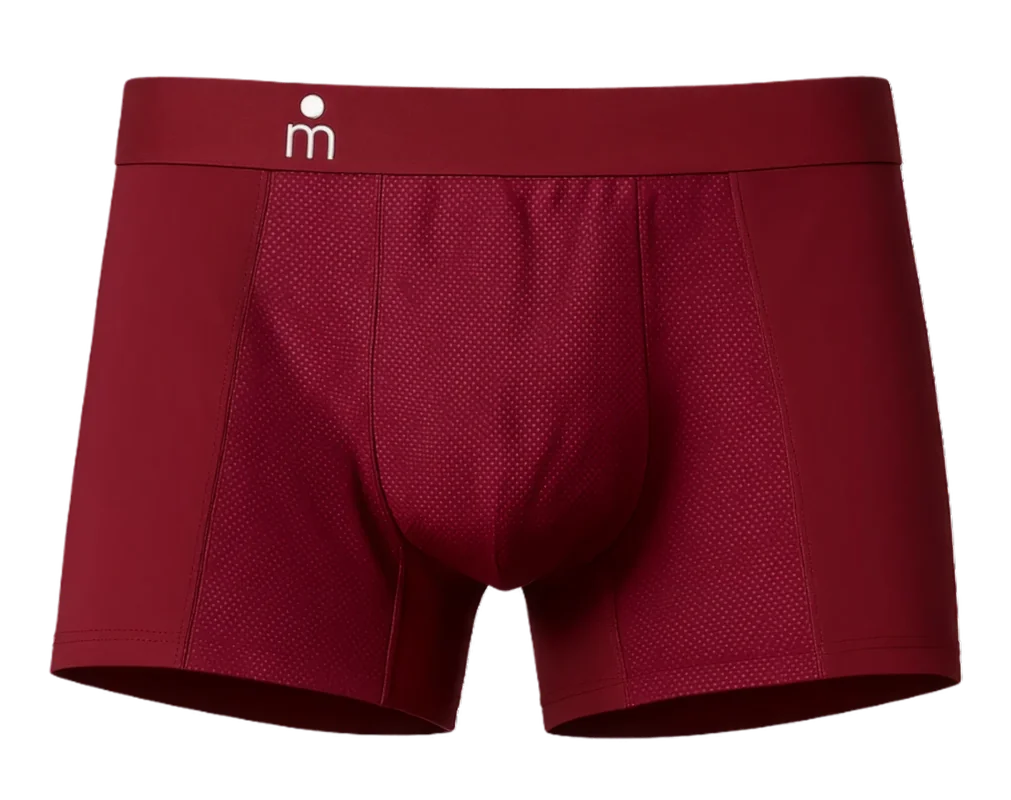
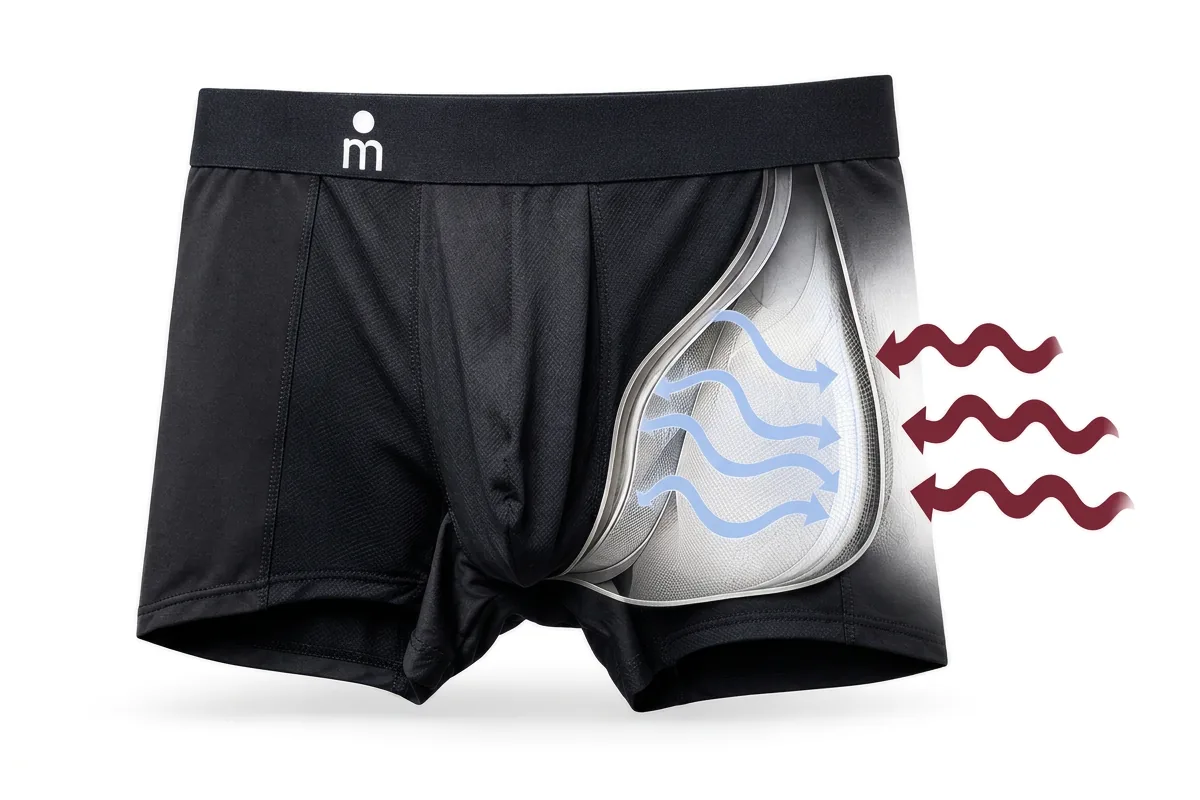
A wider, 3D pouch keeps the testicles separated from the thigh and torso instead of pressing them flat against you. Air moves. Contact heat doesn’t transfer. It is the thing customers mention most often, unprompted.
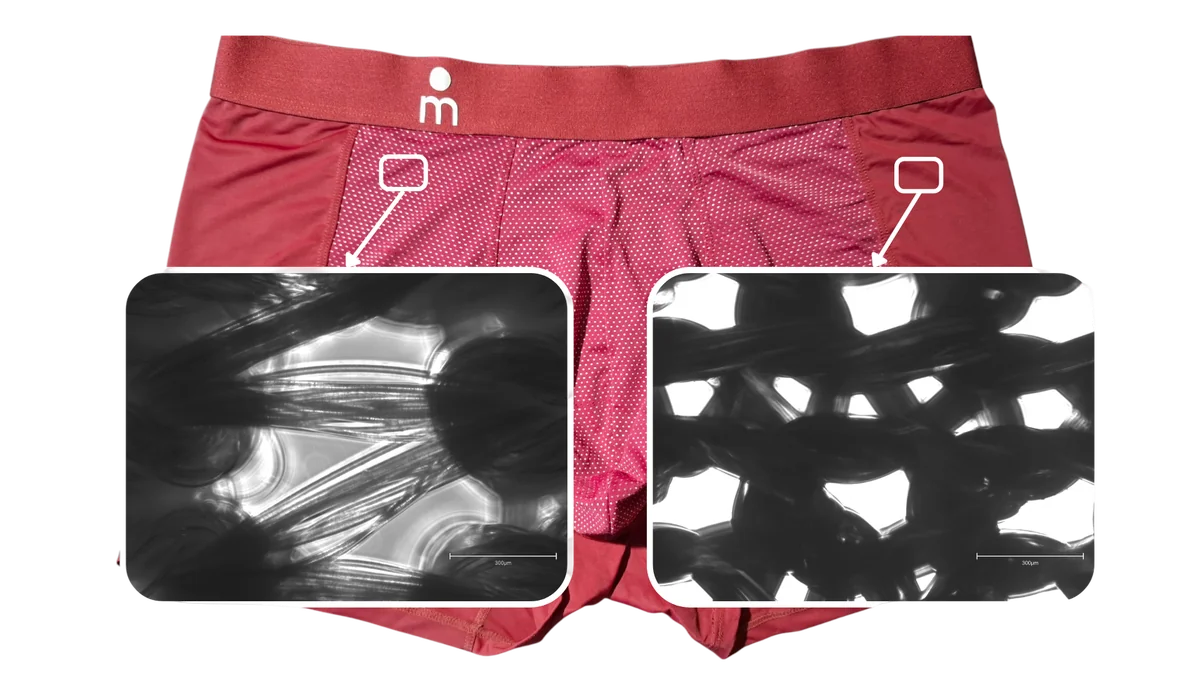
A silver-fibre knit with a spandex mesh panel. Cotton absorbs moisture and holds it against the skin; this moves it to the surface where it evaporates.
Up to 3.4×
the air permeability of cotton — Institute for Textile Technology, University of Ljubljana
References
Independent peer-reviewed studies detailing the impact of temperature and radiofrequency exposure on male reproductive health. Full citations and DOI links below.
1
Optimal temperature for spermatogenesis
Establishes that sperm production operates best at roughly 2-6 °C below core body temperature, and describes the scrotum’s thermoregulatory role.
Mieusset et al., 1995. Zhu et al., 2022
2
Elevated scrotal temperature and sperm parameters
Reports associations between raised scrotal temperature and changes in sperm concentration and motility across a range of exposure contexts.
Gao et al., 2022 De Toni et al., 2023
3
Scrotal temperature and sperm concentration
Observational work relating measured scrotal temperature to sperm concentration.
Hjollund et al., 2002
4
Cellular mechanisms of heat-induced damage
Describes the cellular pathways through which elevated temperature affects germ cells, including oxidative stress and apoptosis.
Durairajanayagam et al., 2021
5
Radiofrequency electromagnetic field exposure and semen quality
Reviews and primary studies examining RF-EMF exposure and semen parameters. Methods and quality vary considerably; the field is not settled.
Kesari et al., 2018 · Darvish et al., 2020
6
Prolonged mobile phone exposure and sperm motility
In vitro work reporting a reduction in normally motile sperm following extended exposure to mobile phone radiation.
Gorpinchenko et al., 2014
Limits
Nobody has shown this for any underwear. Showing it would require a controlled trial with fertility outcomes as an endpoint, which nobody has run. We are not going to imply otherwise.
Permeability is measured on fabric in a laboratory; temperature is measured on a body in the world. Related, not identical — which is why we report both separately.
It is a small internal study without blinding or peer review. It is the honest best we have today, and a proper study is in preparation.
The shielding number is a measured property of the fabric. The literature on RF exposure and semen quality is unsettled. The two should not be joined into a promise.
What is left is what we can stand behind: COOLER, MEASURED. SHIELDED, TESTED.
The rest belongs to the researchers who did the work, and we link to them rather than borrow their conclusions.
Plain English
Spermatogenesis
The production of sperm. It runs on a cycle of roughly 63–74 days, which is why nothing in this area changes quickly.
Sperm motility
The proportion of sperm moving normally. One of the standard parameters reported in semen analysis.
Radiofrequency (RF)
The part of the electromagnetic spectrum used by mobile phones and Wi-Fi. We tested 2–6 GHz because that is what phones actually use.
Air permeability
How readily air passes through a fabric. Measured against a cotton control in a standardised test.
Scrotal temperature
The temperature at the testicles, typically a few degrees below core body temperature. The variable everything on this page is about.
Sperm concentration
How many sperm are present per millilitre of semen. Another standard parameter.
Attenuation
How much a material reduces energy passing through it. Our shielding figure is an attenuation measurement.
Thermoregulation
The body’s management of its own temperature. The scrotum does this by moving the testicles closer to or further from the body.
FAQ
Nobody has shown this for any underwear. Showing it would require a controlled trial with fertility outcomes as an endpoint, which nobody has run. We are not going to imply otherwise.
On the fabric: the sample was fabric from the shielding panel. It is a materials test, on fabric, not on people.
In our own month-long paired wear testing during sedentary office work: 0.4 °C lower on average, with a highest single-day difference of 1.3 °C. The spread is wide and depends on the day, the clothing and the person. That is our measurement, not a published trial.
The difference depends heavily on the day, the trousers, the weather and the person. We publish the range rather than the best number alone.
We are preparing a study with the Faculty of Electrical Engineering, using thermal imaging, to measure temperature reduction under controlled conditions, on people. When it is published we will link it here — whatever it finds.
[Answer to be provided by Majella.]
Disclaimer
Majella is underwear. IT IS NOT a medical device and not a treatment.
If you and your partner are trying to conceive, PLEASE SEE A DOCTOR – that is the single most important thing you can do, and it isn’t buying underwear.
Free UK delivery · Duties paid · 30-day free returns